
Low-impact options for adults with back pain
April 9, 2026



A twinge. A dull ache. A feeling of tightness that wasn’t there before.
If you are reading this, chances are you have felt discomfort in your lower back at some point. Even those who aren’t reading this article have likely experienced it too. At any given time, an estimated 31 million Americans are living with low back pain, and globally, up to 23% of adults experience chronic lower back pain.
While lower back pain is common, the causes — and the solutions — are not always simple. Each person’s experience is different. What feels manageable for one individual may feel frustrating or limiting for another.
Yet one therapy appears consistently in research and clinical guidance: exercise.
Incorporating movement to support back health can be easier said than done, though. High-impact workouts might be intimidating, and some traditional exercise routines may no longer feel comfortable.
Low-impact exercise offers one of the most approachable ways to begin moving forward with confidence.
When movement feels different than it used to
The lower back plays a central role in many of the movements we perform every day. Sitting, standing, walking, bending, reaching — the lumbar spine helps support the body through it all.
Over time, the body naturally changes. Muscles may feel tighter than they once did. Flexibility may not come as easily. Recovery may take longer. Experiences such as arthritis, past injuries, or years spent sitting at a desk can also influence how the back feels during everyday activity.
When managing lower back pain, you don’t want to make the pain worse or aggravate an existing injury. But avoiding movement altogether can contribute to stiffness and reduced mobility, making everyday activities feel more difficult over time.
Healthcare professionals often recommend exercise or physical therapy because it can help support flexibility, circulation, and the muscles that help stabilize the spine. The goal is not to push through discomfort, but to find ways of moving that work with the body rather than against it.
Lower-impact activities for back pain
Intensity. Intervals. Impact. When it comes to exercise, the terminology alone can sometimes feel overwhelming. It may seem like you need to learn an entirely new vocabulary just to understand what type of movement is right for your body.
But when you are managing low back pain, one of the most helpful concepts to understand is impact. Impact refers to the amount of force your body experiences as you move.
Consider the difference between running and walking. Running is typically considered a higher-impact activity because each step creates repeated force that travels through the feet, legs, joints, and spine. Walking, on the other hand, usually involves less force and allows for smoother, more controlled motion.
Other forms of low-impact movement include swimming, aquatic therapy, yoga, cycling, rowing, and water-based exercise. Each offers an opportunity to continue moving while allowing the body to work at a pace that feels supportive.
The unique support provided by water
Water is often considered one of the most joint-friendly environments for exercise because it changes how the body experiences both gravity and resistance.
When immersed in water, buoyancy helps support a portion of body weight. This reduces the amount of compressive force placed on the spine and joints compared to many land-based activities. For individuals managing low back pain, that reduction in pressure can make movement feel more comfortable and controlled.
Because of this support, movements that may feel uncomfortable on land can often feel smoother in the water. Many people find they can move with greater ease, whether focusing on gentle walking motions, range-of-motion exercises, or light strengthening movements.
Water also provides natural resistance in every direction. Unlike traditional strength equipment, resistance in water increases or decreases based on how quickly a person moves. This allows intensity to be adjusted gradually, without the sudden impact or strain that can sometimes accompany land-based exercise.
Researchers continue to explore aquatic therapy and water-based exercise as options for individuals experiencing chronic low back pain. Several systematic reviews of randomized controlled trials suggest that aquatic exercise may help support mobility, physical function, and overall quality of life.
Rebuilding confidence through comfortable movement
When you are recovering from an injury or experiencing low back pain, you may find yourself moving a little differently throughout the day. You might take the stairs more cautiously, avoid certain activities, or notice yourself favoring one side without even realizing it.
That hesitation is completely natural. When something hurts, the instinct is to protect it. No one wants to do anything that might make the discomfort worse. But over time, moving less can sometimes lead to increased stiffness and reduced flexibility, making everyday movements feel more difficult than they once did.
Finding exercises that help you feel more comfortable — both physically and mentally — can play an important role in rebuilding confidence. Research on aquatic exercise has shown improvements in mobility and physical function among individuals with chronic low back pain, in part because the water environment supports movement while reducing stress on the joints.
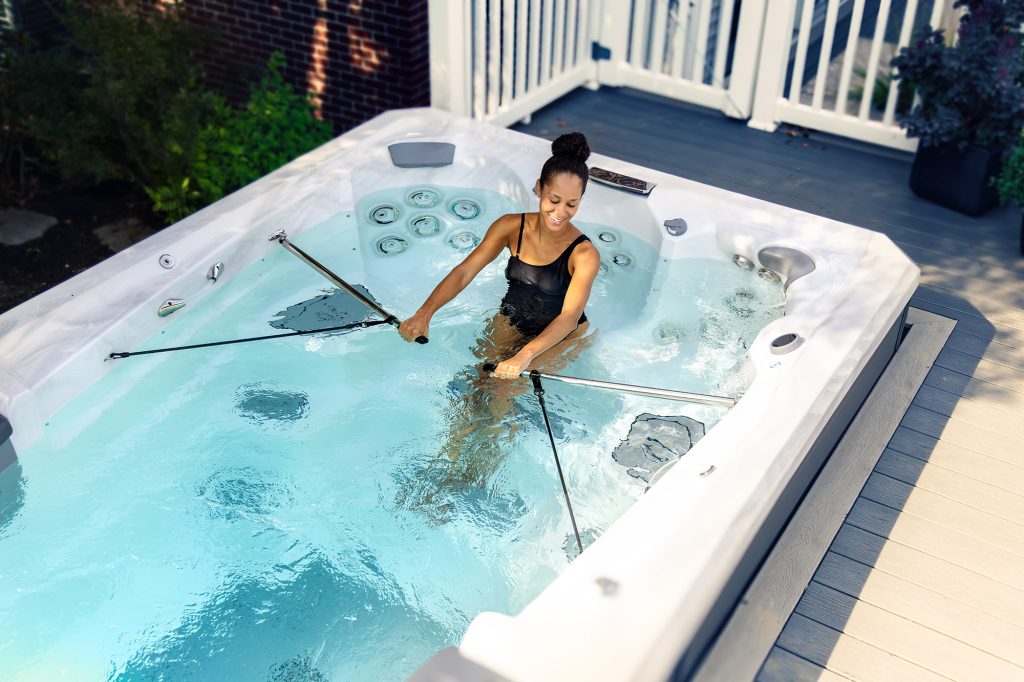
Water provides gentle resistance in every direction, allowing muscles to engage without requiring sudden or forceful effort. Because resistance naturally adjusts based on how quickly you move, intensity can be easily adapted simply by slowing down or gradually increasing pace.
This flexibility allows individuals to explore movement at a level that feels manageable.
Some people begin with slow walking movements in water. Others focus on gentle range-of-motion exercises or light strengthening movements. Over time, as confidence grows, activity levels can increase gradually.
Consistency plays an important role over time
Exercise programs for back discomfort are often studied over periods of several weeks because progress tends to happen gradually.
Gentle, consistent movement helps support circulation, flexibility, and muscle engagement. Over time, small improvements in mobility can make everyday activities feel more comfortable — whether that means standing longer, walking farther, or simply moving with greater ease.
A balanced approach to staying active
Low-impact exercise does not mean limiting movement to only one activity. Many wellness professionals encourage a combination of movement types that support strength, mobility, and cardiovascular health.
For example, a balanced routine may include walking on some days, gentle strength exercises on others, and water-based movement when joints or muscles feel more sensitive.
Different environments can support different needs. Land-based exercise can help maintain bone density and functional strength, while water-based movement can provide a more supported setting for mobility work or active recovery.
Rather than relying on a single approach, many people find that variety helps them continue moving consistently without overloading any one part of the body.
Creating a space for water exercise at home
Sticking to an exercise routine can be challenging — even for those who are not managing low back pain. Some estimates suggest that as many as 80% of people struggle to maintain a consistent exercise plan. When movement already feels uncomfortable, added barriers like travel time, busy schedules, or unpredictable weather can make it even harder to follow through.
Convenience can play an important role in maintaining a consistent workout routine.
Having access to an exercise environment at home can make it easier to stay active without needing to coordinate schedules or adjust plans around the forecast. When movement feels convenient, it often becomes easier to return to it regularly.
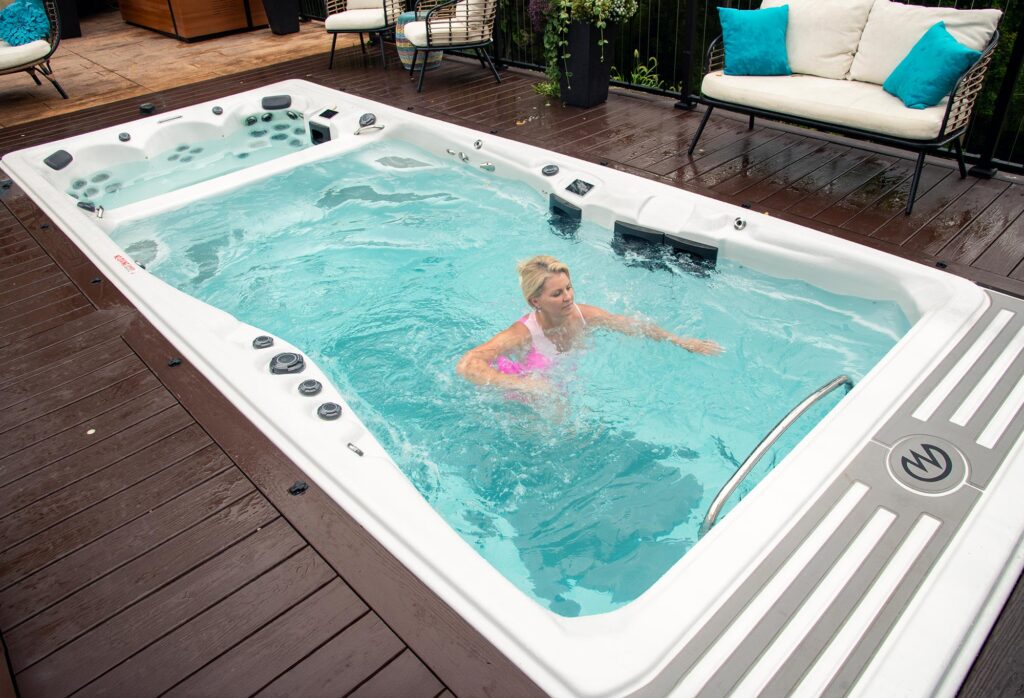
For people who are interested in water exercise, swim spas provide a space for swimming, aquatic therapy, and other movements in a relatively compact space. Adjustable current settings allow each person to determine their own pace, whether focusing on gentle walking movements, light resistance exercises, or continuous swimming.
Because intensity can be adjusted, movement can evolve over time as comfort levels change.
Moving forward at your own pace
Experiencing back discomfort can influence many parts of daily life, but it does not necessarily mean stepping away from exercise altogether.
Low-impact exercise offers a supportive way to keep moving — one that prioritizes comfort, flexibility, and consistency rather than intensity.
Research continues to explore how aquatic exercise may support individuals experiencing chronic low back pain, particularly because the properties of water allow movement to feel more supported and controlled.
Every person’s experience is different. What matters most is finding an approach that feels manageable and sustainable.
Sometimes progress begins not with dramatic change, but with simply feeling more comfortable taking the next step.

FAQ: Low-impact exercise and back pain
What is considered low-impact exercise for back pain?
Low-impact exercise includes activities that minimize repetitive force on the spine and joints while still allowing the body to stay active. Walking, cycling, gentle strength training, stretching, and water-based exercise are common examples.
Why can high-impact exercise aggravate back discomfort?
Activities such as running or jumping create repeated impact forces that travel through the joints and spine. For some individuals, this added stress may increase discomfort. Lower-impact options reduce these forces while still allowing muscles to stay engaged.
Why is water exercise often recommended for people with back pain?
Water supports a portion of body weight through buoyancy, which can reduce pressure on the spine and joints. Water also provides gentle resistance, allowing muscles to stay active without requiring sudden or forceful movement.
How often should you do low-impact exercise?
Many research-based exercise programs span several weeks, emphasizing consistency rather than intensity. Establishing a routine that feels manageable often plays an important role in supporting mobility over time.
Can you combine water exercise with land-based exercise?
Many people find that combining different types of movement helps them stay active without overloading any one area of the body. Water-based exercise can provide a supportive environment for mobility and recovery, while land-based movement can support strength and daily function.