Swim Spa for Fitness and Recovery: What to Know Before You Buy
August 5, 2026



If you’ve started researching a swim spa for fitness and recovery, you’ve probably asked yourself the same question more than once: is this a serious fitness tool, or just a hot tub with a fan blowing bubbles at you?
It’s a fair question. A lot of backyard water features promise “the best of both worlds.” Then they quietly disappoint on one side or the other. Either the current is too weak to train against, or the therapy side feels tacked on — like someone bolted a couple of jets onto a lap pool and called it a day.
Maybe you want to swim, walk, or do resistance work most days of the week. Maybe you also want somewhere to recover afterward, without booking a massage. If that sounds like you, the details actually matter.
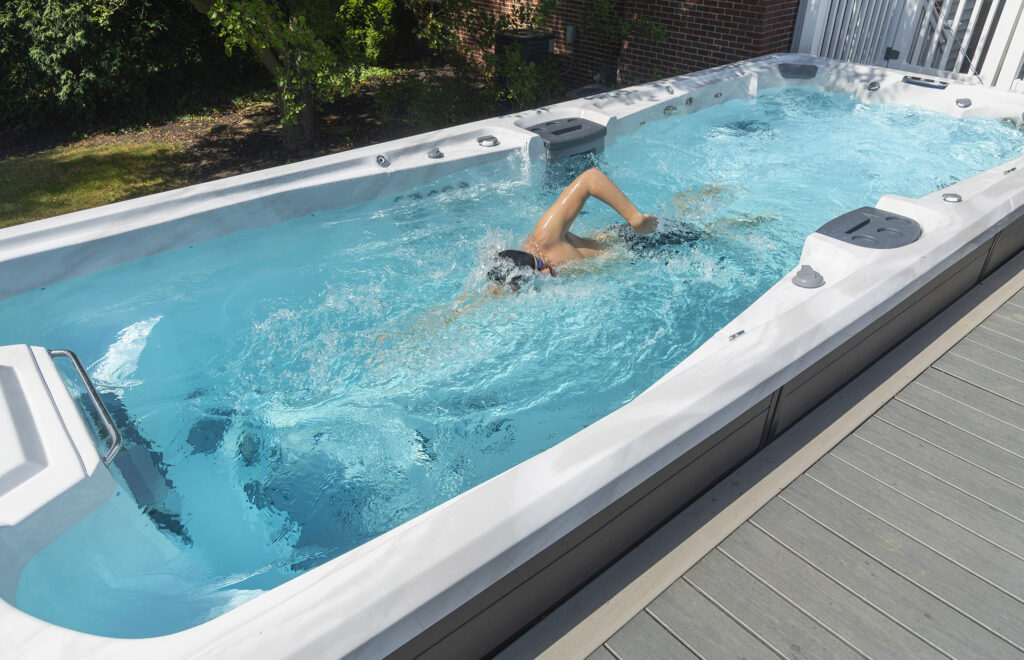
That’s why it’s worth understanding a model like the H2X Challenger 19D MAX. It isn’t the flashiest option out there. But engineers built it to solve one specific problem: how do you give someone a real current to train against, in a compact backyard footprint, without turning the whole project into a construction job?
Start With What You’re Actually Trying to Solve
Before you get into jets and horsepower, think about why you’re considering a swim spa for fitness and recovery in the first place. Usually, it comes down to one of three things.
Some people are training for something specific — a triathlon, a return to fitness after an injury, or just a daily swim habit they can’t maintain at a crowded public pool with limited lane times. For this person, the current itself is the whole point. If it’s inconsistent, narrow, or weak, the spa becomes a novelty instead of a tool.
Others want something gentler. Maybe a joint issue or a doctor’s recommendation is pushing them toward low-impact movement. Maybe walking on land simply isn’t comfortable anymore. Mayo Clinic notes that aquatic exercise takes pressure off the bones, joints, and muscles, while water’s natural resistance still helps build strength. That combination is part of why doctors often recommend it for people managing arthritis or recovering from injury.
And then there’s the household that just wants a backyard the whole family actually uses. They picture a spot where the kids can play, and the adults can unwind in the evening — without pool chemicals, a filtration crew, or a season that ends every fall.
The Challenger 19D MAX targets all three of these buyers. That’s part of why it sits in the middle of the H2X lineup instead of at either extreme.
Does the Current Actually Feel Like Swimming?
Most of the skepticism around a swim spa for fitness and recovery comes down to one thing: does the water actually feel like something you can swim against? Or does it just feel like standing in a jacuzzi with the jets turned up?
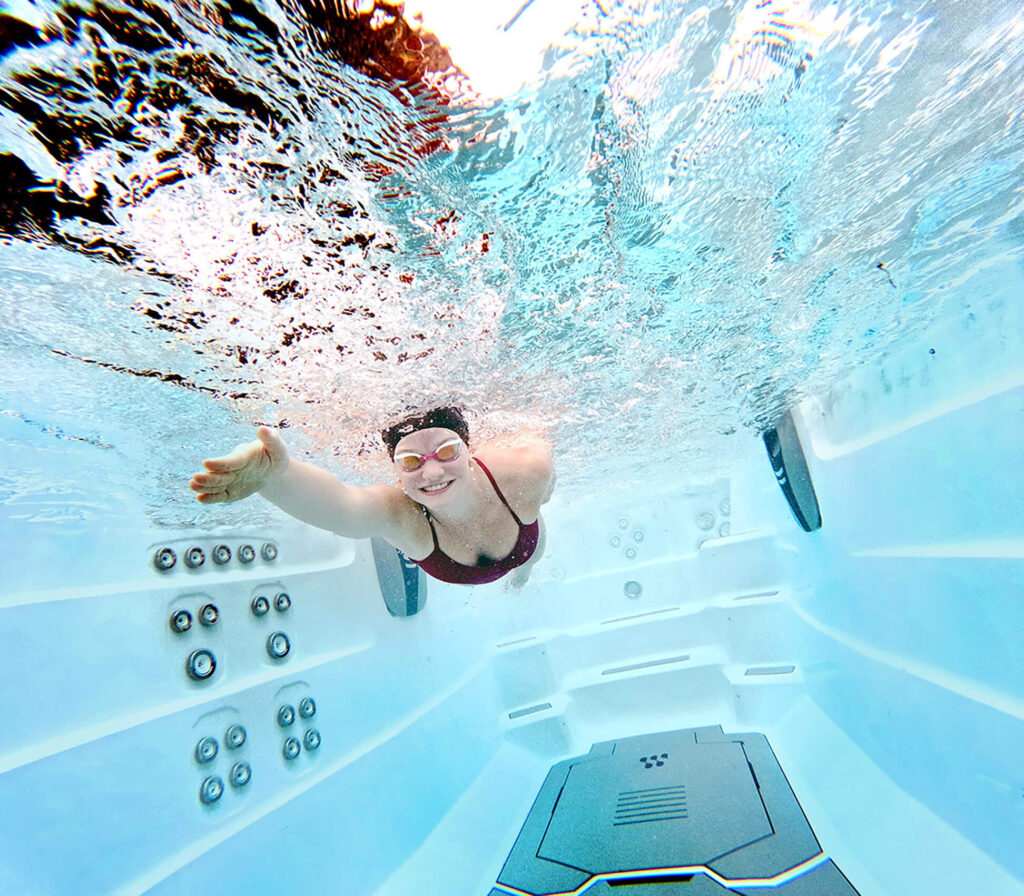
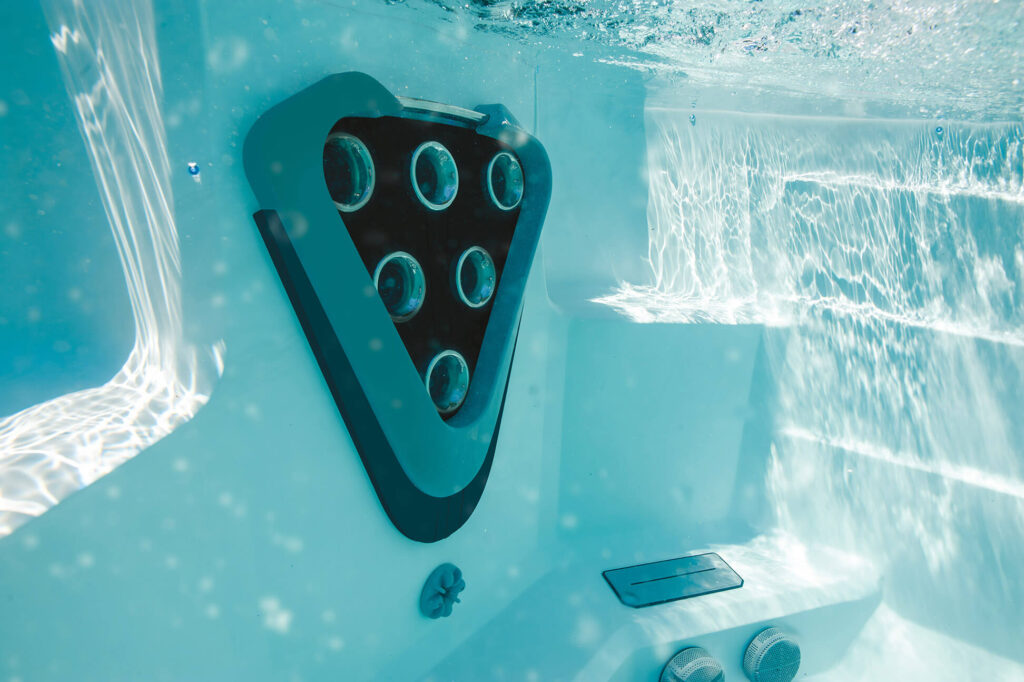
The Challenger’s propulsion system answers that question with a few specific engineering choices, not just raw power. Six airless swim jets generate the current. The word “airless” matters more than it sounds. Air-injected systems mix bubbles into the stream, and that creates a choppier, less predictable pull along with cloudier water. Keeping air out of the stream keeps the current steadier and the water clearer.
A Velocity Injector Plate then shapes that current. It controls how water enters the swim area. Instead of a narrow stream hitting one part of your body, the flow spreads wider, so you engage more of your body with the resistance. In other words, it feels more like swimming and less like getting sprayed by a hose.
From there, an adjustable dial — AquaSpeed VSP — lets you control the intensity yourself. This matters if you’re worried about outgrowing the spa. It also matters if you’re worried it’ll be too much on day one. In practice, most owners start on a gentler setting for walking or easy laps, then dial up the intensity as their fitness builds. The current grows with you instead of locking you into one pace.
Three pumps power the whole system. They split the work between the swim current and the hydrotherapy jets. That’s worth mentioning, because it explains how the spa handles both jobs — training and recovery — without one job taking away from the other.
Recovery Isn’t an Afterthought
Here’s the part people often underestimate when they compare options: what happens after the workout matters just as much as the workout itself.
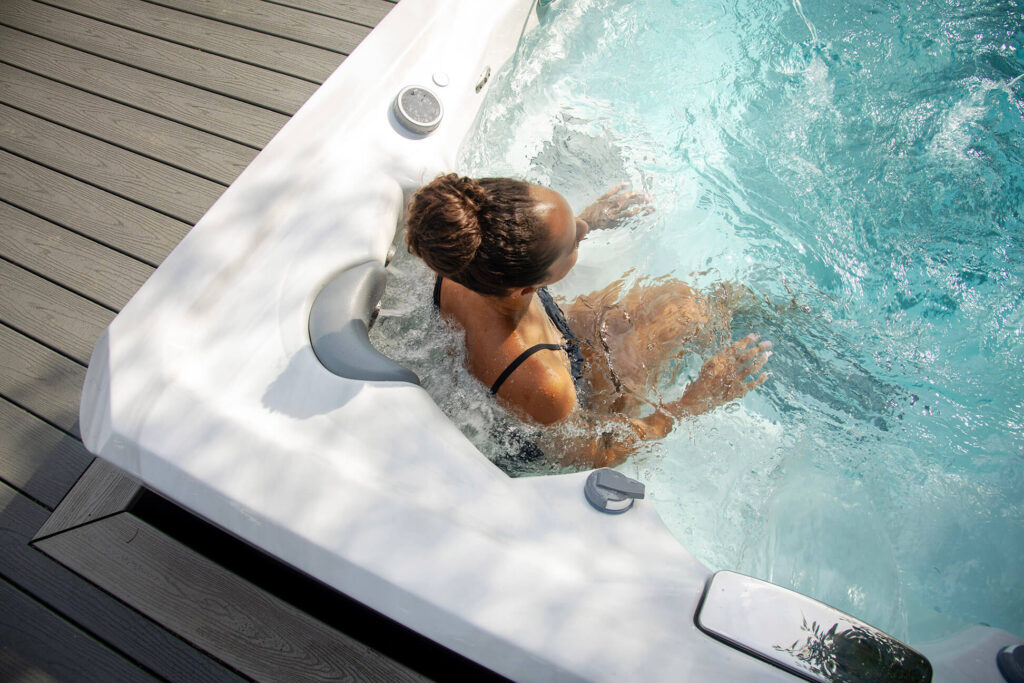
The Challenger 19D MAX places contoured therapy seating right next to the swim area, so you can move straight from swimming into a massage without leaving the water. The StressRelief Neck and Shoulder Seat targets an area where most people carry tension, whether they exercised that day or not. A bio-magnetic therapy system works alongside that seating. The spa also includes a dedicated therapy zone — the Xtreme Therapy Cove — with a jet pattern that targets the back, hips, thighs, and calves. That’s usually exactly where a hard swim or resistance session leaves you sore.
The practical upshot: you don’t swim here and then go inside to stretch. The design builds recovery into the same footprint. That makes consistency easier, because you never have to leave the backyard to finish the routine.
The Size Question: Why 19 Feet Specifically
The 19D MAX measures 231 inches long, 94 inches wide, and 60 inches deep, and it holds 2,350 gallons. That makes it the largest single-zone swim area in the H2X lineup. The phrase “single-zone” matters here — it means the entire footprint is swim space, instead of splitting the tub into separate hot-tub and swim sections.
Think through that trade-off honestly before you buy. Do you want a distinctly separate relaxation lounge and hot tub section, in addition to the swim area? Then look at a dual-zone model like the Challenger 21D instead. Does your yard or budget limit you, but you still want the same current quality? The smaller Challenger 15D keeps the same swim system in a tighter footprint. The 19D MAX sits in between: it suits someone who wants maximum open water for swimming, walking, or exercising, without needing a separate lounging zone.
None of these options is simply “better” or “worse” — each one serves different priorities. Ask yourself this instead: how much of your time in the water will you actually spend moving, versus sitting still? That answer points you toward the right size.
What About Water Care and Everyday Upkeep?
A traditional pool demands a seasonal commitment. You handle filtration and chemical balancing, open and close it every year, and dedicate a lot of square footage that sits unused half the year. A swim spa for fitness and recovery works differently — it’s built for a year-round routine instead.
The Challenger 19D MAX uses the EcoPur Charge system as standard. A mineral blend of copper and zinc helps reduce contaminants and microorganisms as water passes through the filter, and an ozone system works alongside it to keep the water feeling fresh with less manual maintenance. Full-foam insulation also helps the spa hold heat and run quieter, which matters if you plan to use it through colder months rather than just in summer.
Plan for one thing early: the spa needs dedicated 240V/50-amp electrical service. Loop in an electrician early in the process, since that’s typically the one piece of the install you need to sort out before delivery day, not after.
Is a Swim Spa Actually Worth It Compared to a Pool?
This is usually the real question underneath all the others, so let’s answer it directly.
A traditional pool gives you space, but it doesn’t give you resistance. You’re not training against anything, and in most climates, you can only use it part of the year. A swim spa flips that trade: you get less total water, but you gain a continuous current to swim, walk, or train against, plus therapy features for when the workout’s done, and you can use it in January just as easily as July.
If you’re genuinely chasing an active lifestyle — not just water in the backyard — that trade tends to make sense. But if you actually want a place for the kids to splash around and guests to float in on a summer afternoon, a pool might still fit you better. Get honest about which one you’re solving for, and you’ll avoid buying the wrong thing.
The Bottom Line
The Challenger 19D MAX doesn’t try to be everything to everyone. It gives you a real, adjustable current to train against, then lets you recover in the same footprint, year-round, without the overhead of a traditional pool. Whether it’s the right swim spa for fitness and recovery for you depends less on the spec sheet and more on how you plan to use it. Are you training for something specific? Moving gently and consistently? Giving your household a reason to get outside? Get clear on that first, and the size and feature list will make a lot more sense.