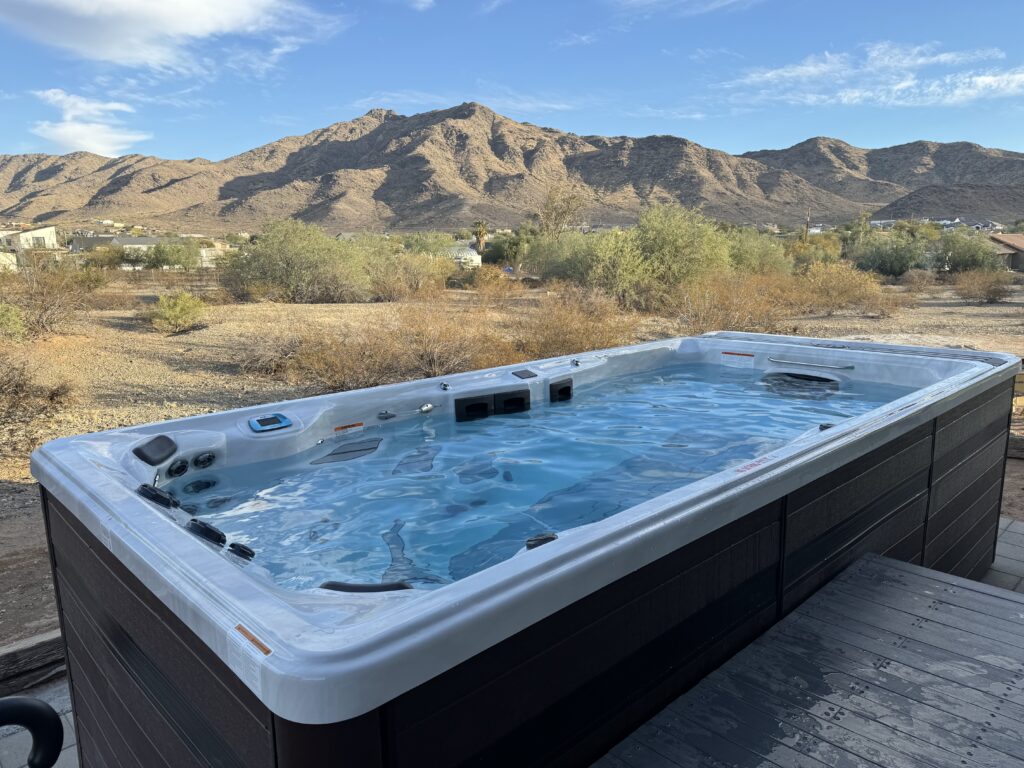
Swim spa vs pool: What to know before you decide
February 3, 2026



If you’re comparing a swim spa vs pool, the right choice comes down to how you want to use your backyard. A traditional pool is often designed for recreation and entertaining, while a swim spa combines fitness, relaxation, and year-round use in a more compact space.
Both options can give you a place to cool off, stay active, and spend time outside. But how they fit into your daily life — and how often you’ll actually use them — can look very different.
For decades, the in-ground pool has defined the classic backyard dream. It’s the image many of us grew up with — summer afternoons in the water, kids racing for the diving board, long evenings spent poolside with friends and family.
But a growing number of homeowners are realizing that a pool isn’t the only way to bring water into their outdoor space.
Swim spas have entered the conversation as a pool alternative that supports exercise, recovery, and all-season use — often in a smaller footprint.
And if you’ve always pictured a pool, that shift can feel complicated. Letting go of a familiar idea isn’t easy. The question becomes less about what you’ve always imagined and more about what will actually fit the way you live now.
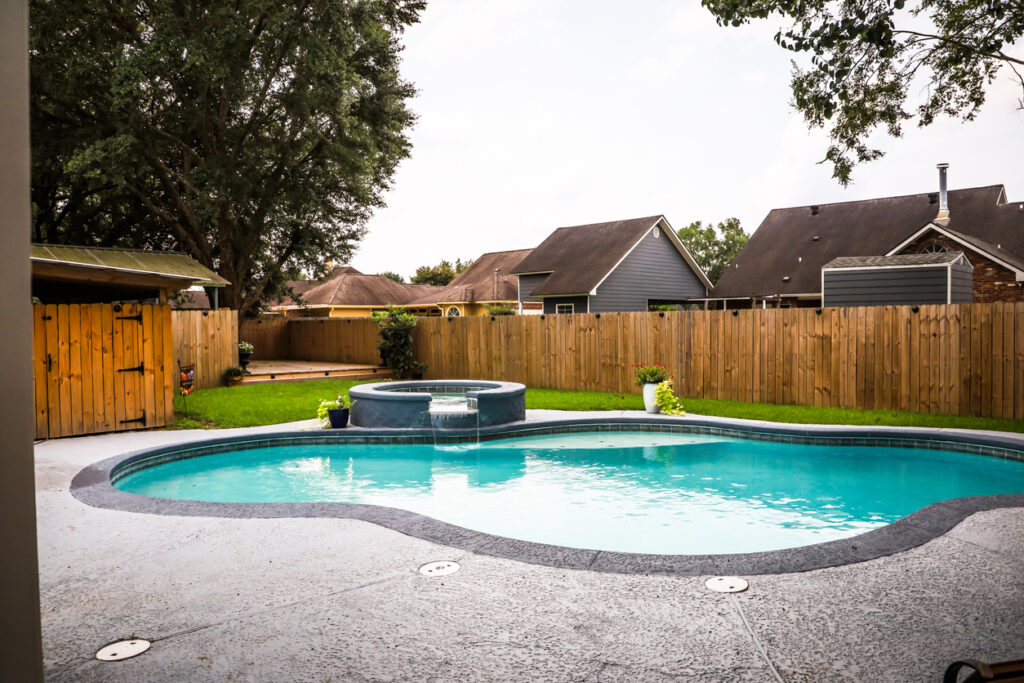
Quick comparison: swim spa vs pool
| Feature | Swim Spa | Swimming Pool |
| Primary Use | Fitness, relaxation, daily use | Entertaining, recreation |
| Size | Compact (typically 11–21 ft) | Larger footprint (often 30–40 ft long) |
| Swimming Style | Continuous current | Short laps, frequent turn |
| Installation | Self-contained unit | Months-long construction project |
| Use | Year-round | Seasonal |
| Maintenance | Smaller water volume | Larger water volume |
What each option is really designed for
An in-ground pool is often the nostalgic centerpiece of a backyard. It’s expansive, open, and built for play. It invites diving, floating, games with kids, and gatherings that stretch through warm summer evenings. For families with younger children or people who love hosting, that traditional pool experience carries a lot of appeal.
A swim spa might initially seem like the more practical option. You can swim against the current. Do water-based exercise. Recover in therapy seating afterward. But modern swim spas have evolved far beyond their earliest designs. For many homeowners, what once felt purely functional now feels thoughtfully composed—combining fitness, hydrotherapy, and recreation in a way that fits everyday life.
Owners often talk about it becoming part of their daily routine rather than a once-in-a-while feature. Morning swims before work. Gentle water walking in the evening. Time spent easing sore muscles at the end of the day. It’s less about waiting for the perfect summer afternoon and more about having something they genuinely look forward to using each day.
Water care and maintenance
There’s no getting around it. If you own a pool or a swim spa, you have to take care of it. Sanitizer needs to be added. Filters have to be cleaned. Water chemistry must stay in balance.
But while you might spend your summer afternoons floating in either one, the maintenance behind the scenes is not the same. For homeowners who have experienced both, the difference is often one of the first things they mention.
Pool maintenance
Owning an in-ground pool usually means settling into a year-round maintenance calendar, whether or not the pool is being used. Day to day, that often includes checking water levels, making sure sanitizer systems are running properly, emptying skimmer baskets, and keeping pumps and filters operating smoothly. Leaves, insects, and debris can gather quickly, especially during windy or stormy weeks, which leads many owners to skim surfaces or inspect cleaners daily during peak season.
Weekly care tends to go a step further. Water needs to be tested and balanced, and shock treatments are commonly added to keep it clear. Owners will also brush pool walls and floors to prevent algae from taking hold. Specialty chemicals may be introduced to support filtration and manage staining or scale buildup. Even pools with robotic cleaners usually require hands-on attention.
Monthly and annual responsibilities add another layer. Filters need cleaning when pressure builds. Calcium hardness and stabilizer levels are monitored and corrected. Diving boards, ladders, and slides are inspected. Equipment seals and fittings are lubricated.
Water care for swim spas
Swim spa maintenance follows a different rhythm, largely because the vessels contain far less water and remain covered when not in use.
Homeowners typically test water before or after sessions, keep sanitizer levels in range, and make small adjustments several times a week. Because the volume is lower, corrections tend to be quicker and changes in water quality easier to address early.
Monthly attention focuses on filter care—rinsing or soaking elements and keeping systems running efficiently. Water is usually drained and refreshed once or twice a year. The process itself is far simpler than draining an in-ground pool simply because there is so much less water involved.
That does not make swim spas maintenance-free. They still require consistency and attention. But for many homeowners, the routine feels more contained and predictable—especially compared to the layered daily, weekly, seasonal, and annual responsibilities that come with a traditional pool.
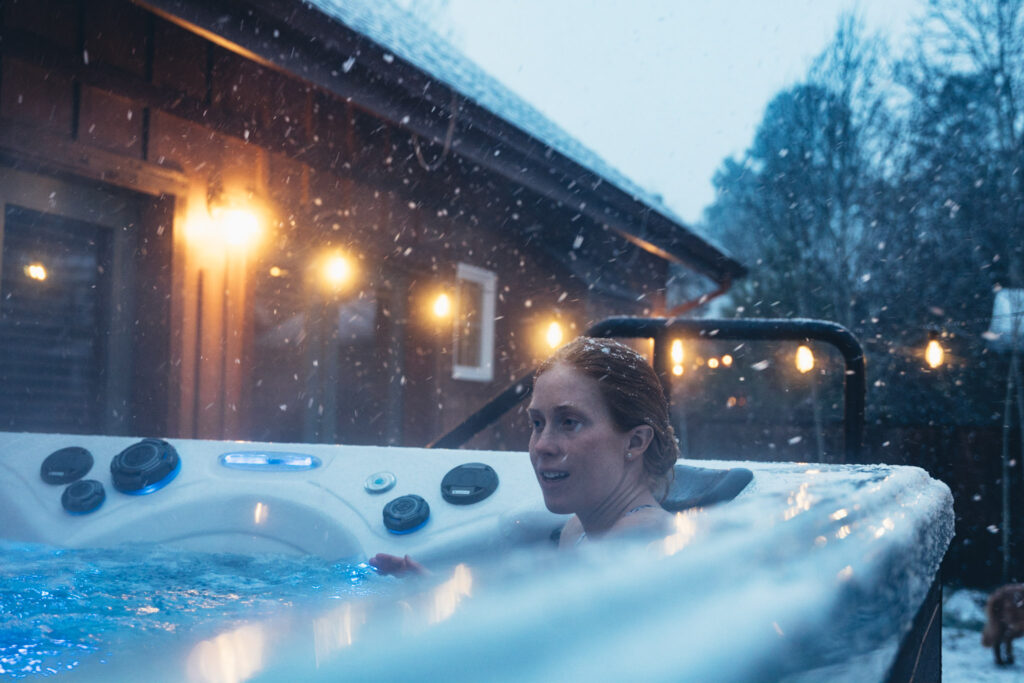
Seasonal preparation versus year-round access
In many regions, owning an in-ground pool means living by the calendar. Spring brings opening appointments, chemical treatments, equipment inspections, and waiting for the water to warm. Fall involves covering the pool, winterizing plumbing, and shutting systems down for months.
For people in cooler climates, that can mean maintaining a pool for much of the year while swimming for only a small portion of it.
Swim spas are typically insulated and heated for four-season operation. Instead of closing for winter, owners often talk about using them straight through colder months—swimming against a current while snow falls nearby or spending time in warm water on crisp evenings. In summer, temperatures can usually be adjusted so workouts stay refreshing rather than overheated.
How people tend to use them over time
This part of the decision often reveals the most.
In-ground pools excel in social settings. They naturally draw kids, neighbors, and extended family. They are ideal for lively weekends, birthday parties, and long summer afternoons.
Swim spas tend to support a quieter, more intentional routine. Owners often describe using them several times a week for exercise, recovery, or relaxation rather than for occasional gatherings. Adjustable currents, resistance zones, and ergonomically designed seating make it easier to integrate movement and recovery into daily life.
It is common for homeowners to lean toward swim spas during life transitions. Children grow older. Entertaining becomes smaller. Health, mobility, and everyday movement become higher priorities. In those moments, something that encourages consistent use can feel more valuable than a feature reserved mainly for peak summer days.
Features and add-ons that reshape expectations
One reason some shoppers begin leaning toward swim spas is the growing range of features that elevate the experience beyond splashing or leisurely floating.
Advanced swim technology creates an endless current for swimming, aqua jogging, and other water fitness workouts. Integrated sound systems, ambient lighting, intuitive controls, and advanced water-care options can make everyday sessions feel polished and comfortable. Some configurations allow for different temperature zones, keeping one area warm for hydrotherapy while another stays cooler for training.
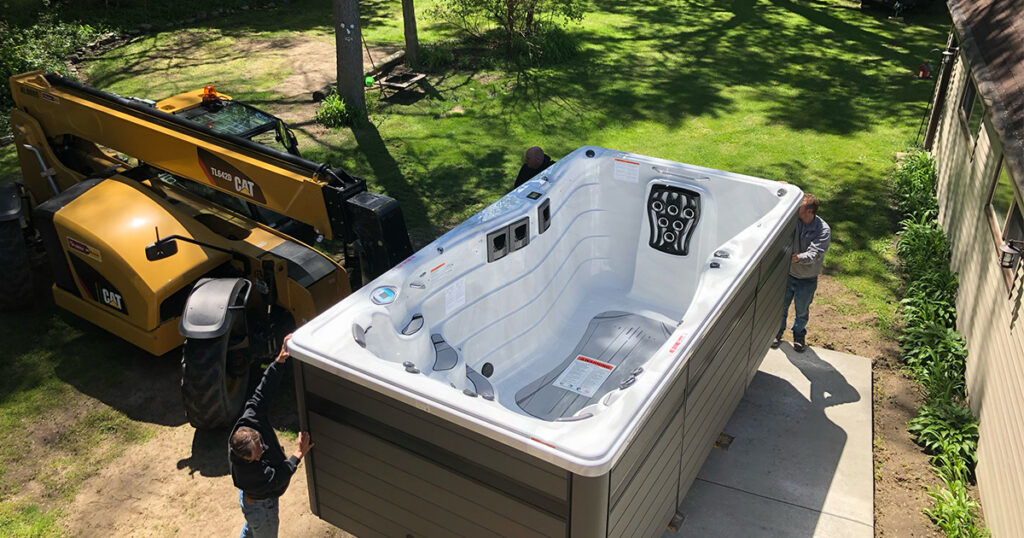
Space, installation, and how permanent you want to be
An in-ground pool usually involves major excavation, surrounding decking, fencing, and a long-term footprint that reshapes the yard.
Construction timelines can stretch over weeks or months depending on permitting, weather, and site conditions, and yards are often disrupted during that process.
Swim spas typically take up less space and offer more flexibility in how they are installed. They can be placed above ground, partially recessed, or built into deck designs, which appeals to homeowners working with smaller lots or those who want to preserve lawn space.
Installation timelines are often shorter as well, since swim spas arrive as self-contained units rather than being built from scratch on site. In fact, once your site is ready, swim spa deliveryand set-up take less than a day.
That smaller footprint also factors into future planning. Some buyers like knowing that a swim spa can, in certain situations, be relocated rather than remaining a permanent structure.
Cost over time, not just at installation
The cost of a swim spa or an in-ground pool varies widely depending on size, finishes, site preparation, and region.
Typically, swim spas fall in the $20,000 to $60,000 range, while in-ground pool projects can reach—and surpass—six figures once excavation, decking, fencing, and landscaping are included.
Long-term expenses matter just as much. Heating large volumes of water, paying for seasonal service visits, and managing chemicals can add up. In some locations, insurance considerations may differ between permanent pool installations and spas.
Because swim spas hold far less water and remain covered when not in use, many homeowners find monthly operating costs easier to anticipate. Utility rates, climate, and temperature settings still play a role, but the predictability appeals to buyers who want fewer surprises after installation.
Safety: planning for everyday use and peace of mind
Safety should always be part of the conversation when exploring backyard upgrades. Pools and swim spas both require thoughtful design, clear household rules, and setups that reflect who lives in the home—young children, teenagers, visiting grandkids, or pets.
With in-ground pools, safety planning is often built directly into the project. Fencing, self-closing gates, alarms, covers, and lighting are commonly required by local codes. Because pools are typically uncovered during swim season and visible from multiple points in the yard, homeowners often think carefully about supervision, sightlines, and access.
Swim spa safety is a different conversation by design. For example, H2X Fitness Swim Spas incorporate locking covers that help create a clear boundary between the water and the yard when the spa is not in use. Above-ground installations and raised entry points can also add reassurance for households with children or frequent guests.
That said, neither option removes the need for vigilance. Supervision, education, and understanding how systems operate remain essential regardless of size.
A balanced takeaway
When you step back, the differences usually come down to three things: how often you want to use it, how much time you want to spend maintaining it, and how your household is likely to change over time.
Some people still love the open feel and social energy of a pool. Others cannot imagine giving up winter swims or the simplicity of a smaller system. A few have had frustrating service experiences with one option or the other, which reinforces how important it is to work with knowledgeable local professionals and understand long-term care before committing.
The most consistent conclusion is simple. The better choice is the one you will actually use.
Frequently asked questions about swim spas vs pools
Is a swim spa cheaper than a pool?
In many cases, yes. Because swim spas are self-contained and require less construction, your total project cost may be lower than installing a traditional pool. However, pricing varies based on size, features, and installation requirements.
Can you really swim in a swim spa?
Yes. Swim spas generate a continuous current that allows you to swim in place, which you can use for fitness training and endurance workouts.
Are swim spas easier to maintain?
Since swim spas contain less water than pools, you may find routine water care and cleaning easier to manage.