
Is a vault a bad idea for a swim spa?
January 22, 2026



It usually starts with a sketch. Not a blueprint — more like a rough idea.
A swim spa tucked into the patio. Maybe sunk just enough to look built in. Clean lines. Easy step-in access. Something that feels intentional, not like a large piece of equipment placed in the yard.
Then the questions creep in.
Is this a bad idea? What happens if it floods? Why do service techs keep saying they need space?
If you’ve been watching videos, reading forums, or scrolling Reddit, you’ve probably seen versions of the same post:
“Am I naive for thinking about digging this myself?”
You’re not an naive. But a swim spa vault is one of those ideas that sounds simpler than it actually is — and whether it becomes a great solution or a long-term headache depends on a few details most people don’t think about at first.

Why the idea of a vault is so appealing
A swim spa is a substantial piece of equipment. Even when you love the idea of one, it’s natural to want it to feel like part of the landscape instead of the focal point.
A vault promises a lower profile that feels more integrated, easier entry and exit, and a finished look that mimics an in-ground pool — while still offering the year-round use and versatility of a swim spa.
For homeowners already investing in hardscape or expanding a patio, a vault can feel like the logical next step. If we’re already doing this work, why not do it right?
Important considerations
A swim spa isn’t a passive structure. It’s a self-contained system with pumps, plumbing, controls, and electrical components that are designed to work hard over time.
A vault becomes part of that system. It needs to support the spa’s full weight, manage water and moisture, and remain serviceable long after installation day. When those elements are considered from the beginning, a vault can be both beautiful and practical.
This is why installers and service technicians talk so often about access. When you hear recommendations like allowing roughly three feet of clearance on a service side, it’s not meant to complicate your design or limit creativity. It’s about making sure the swim spa can be properly cared for throughout its life.
Panels need to be removable. Components need to be reached safely. Routine maintenance — and the occasional unexpected repair — should be possible without dismantling surrounding masonry, decking, or hardscape.
Vaults tend to run into trouble when access is treated as something to solve later, or assumed to be unnecessary because everything looks clean and finished on installation day.
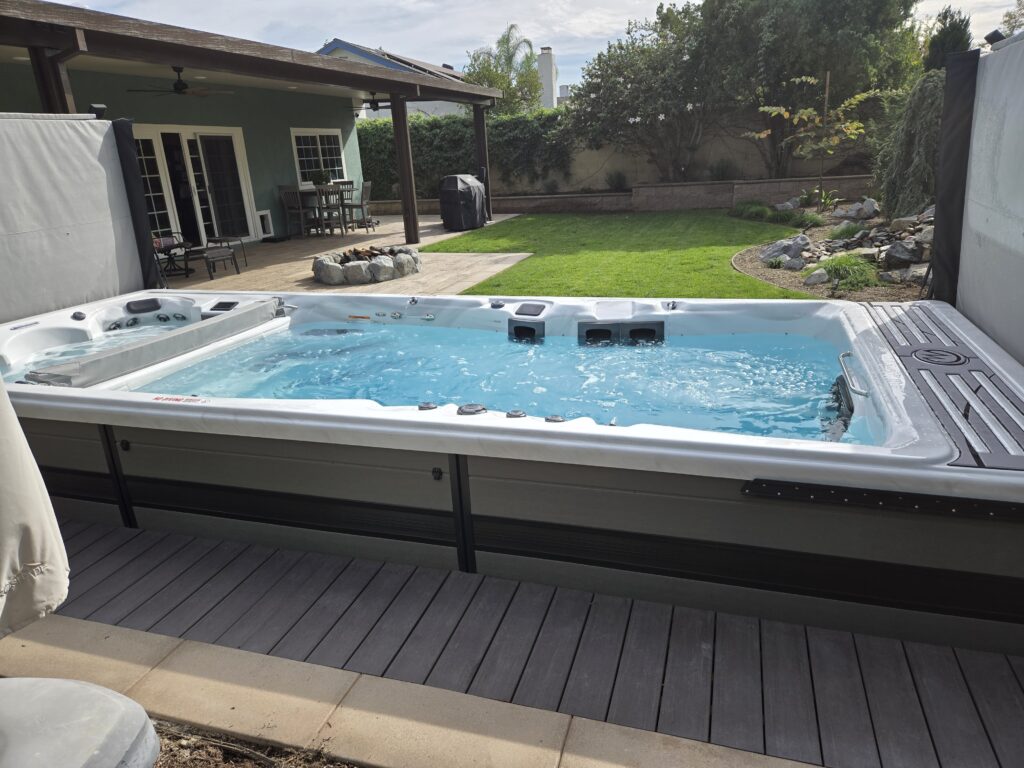
Drainage and water management
Another important consideration when planning a swim spa vault is water management.
A swim spa holds a large volume of water — sometimes as much as 2,350 gallons. Add rain, splash-out, snowmelt, or groundwater, and a below-grade space can collect moisture whether you want it to or not.
Some homeowners assume gravel alone is enough. Others plan for drainage but don’t fully account for heavy rain or long-term saturation. Over time, standing water can affect electrical components, insulation, structural materials, and overall serviceability.
The vault itself usually doesn’t fail all at once. It simply becomes harder to manage year after year.
Planning for drainage from the start can help protect your investment. Depending on site conditions, that might include a French drain to move water away from the structure. In areas where groundwater is a concern, a sump basin with a pump may be the more reliable solution.
Is a DIY swim spa vault a real option?
There are plenty of home projects that feel reasonable to take on yourself—especially if you’re comfortable with tools, have tackled hardscape before, or want to get a jump start to help manage costs. So when the idea of a swim spa vault comes up, it’s easy to imagine handling at least part of it on your own. A few friends, some shovels, and a productive weekend can make almost anything feel doable.
That mindset shows up often in online discussions, particularly from homeowners who are stuck waiting on callbacks or navigating long contractor timelines. When progress stalls, doing it yourself can feel like the most direct path forward.
What’s important to understand is that a swim spa vault functions more like a small structural build than a landscaping project. It has to safely support the full weight of the spa when filled, account for drainage and moisture over time, and preserve clear access for servicing.
That doesn’t mean homeowners can’t be involved, or that every part has to be handed off. But it does mean the plan needs to be fully thought through before excavation begins.
Do swim spas actually need access on all sides?
Not always. What they do need is intentional access — particularly on the primary service side.
The reason access comes up so often in swim spa conversations is simple: a swim spa is a mechanical system, not just a vessel of water. Pumps, plumbing, and controls are designed to be serviced from behind removable panels. That space isn’t about daily use. Rather, it’s about making sure maintenance can be handled cleanly and efficiently over the life of the spa.
When you hear recommendations like allowing around three feet on a service side, it can sound excessive at first. But in practice, that clearance is actually modest — especially compared to traditional pools, which often require far more space for circulation, equipment access, and safety clearances.
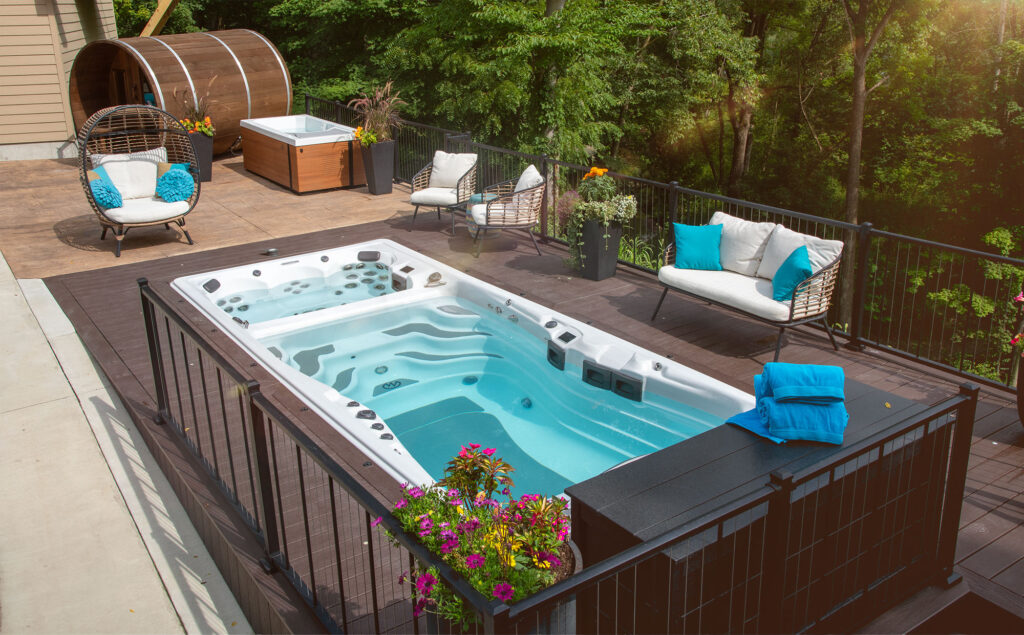
That three-foot zone doesn’t have to feel wasted, either. Many homeowners use it to create purposeful decking that improves how you move around the spa — whether that’s a clear walking path, a transition space between levels, or an area that makes entering and exiting the water feel more natural. Rather than spreading extra space evenly on all sides, thoughtful layouts concentrate usable decking where it adds real value.
The option many buyers don’t consider at first
Interestingly, many homeowners who start out thinking they need a vault eventually choose a different approach.
A partially recessed swim spa installation, or thoughtfully designed steps and decking often deliver the same benefits — easier access, cleaner visuals — without introducing long-term service complications.
Because swim spas are self-contained, they offer more flexibility than traditional pools. Sometimes the best solution isn’t sinking the spa farther into the groun, but designing the space around it more thoughtfully.
So… is a vault a bad idea?
No. A vault isn’t a bad idea.
A poorly planned vault is. A vault that prioritizes looks over access is. A vault built without accounting for drainage and long-term service is.
But a well-designed vault — created with access, water management, and ownership over time in mind — can work beautifully.
The key is remembering that installation isn’t just about day one. It’s about how easy the swim spa will be to own five, 10, or 15 years from now.
If you’re still in the consideration phase, the most helpful next step isn’t committing to a specific vault design. It’s understanding how placement, access, and layout work together before decisions are locked in.
Planning tools can help make those tradeoffs clearer. The H2X Backyard Planning Guide walks through space requirements, installation options, and layout considerations so you can explore what works best for your backyard — whether that includes a vault, a partial recess, or a more flexible design approach.