

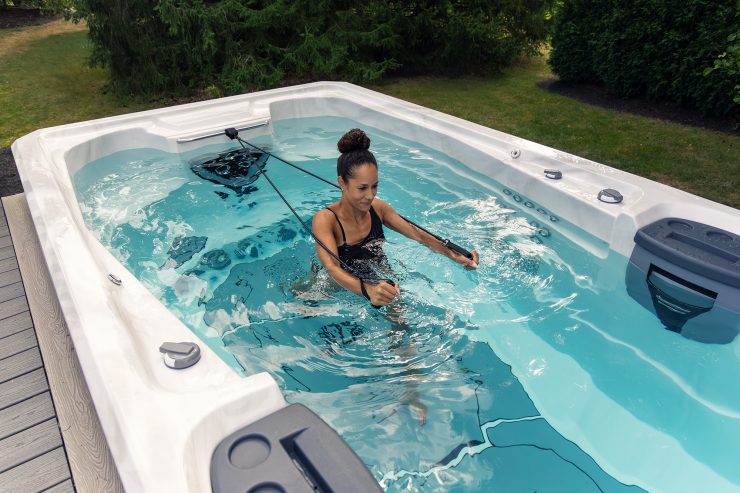
There often comes a point when the way you approach exercise begins to change.
You still want to stay active, but the goal may no longer be pushing intensity or chasing personal records. The focus shifts toward maintaining strength, supporting mobility, and continuing to do the activities you enjoy without discomfort holding you back.
Why the change? Certain workouts may come with more aches and pains than they used to. Recovery might take longer after a challenging session. Or the thought of driving across town for a workout becomes less appealing than finding something that fits more naturally into your routine.
Supporting both longevity and convenience, an exercise pool for home allows you to stay active in a way that works with your body and your lifestyle. Water supports your weight while creating natural resistance, helping you maintain strength, improve endurance, and support mobility with less strain on joints.
For many homeowners, the decision becomes less about adding another backyard feature and more about creating a space that supports long-term wellness — one that helps you continue living life on your terms.
What is an exercise pool?
Almost any pool can be used for exercise if you choose to spend your time in the water moving with purpose. But most residential swimming pools are designed primarily for recreation — a place to cool off, relax, and enjoy time outside during warmer months.
An exercise pool is designed with activity as the priority. Instead of focusing mainly on recreation, the layout and features are intended to support consistent use, whether that means swimming, aquatic therapy, or low-impact exercise.
Many exercise pools use a current system that allows you to swim in place. Rather than needing the length of a traditional lap pool, the water provides steady resistance so you can maintain a continuous swim without turning or interrupting your rhythm.
The same environment can support a variety of water-based exercises including walking, jogging, resistance movements, and stretching. Because water reduces impact on joints while still engaging muscles, exercise often feels productive without placing unnecessary stress on the body.
For many people, this combination of support and resistance makes it easier to stay consistent, especially when comfort becomes just as important as performance.
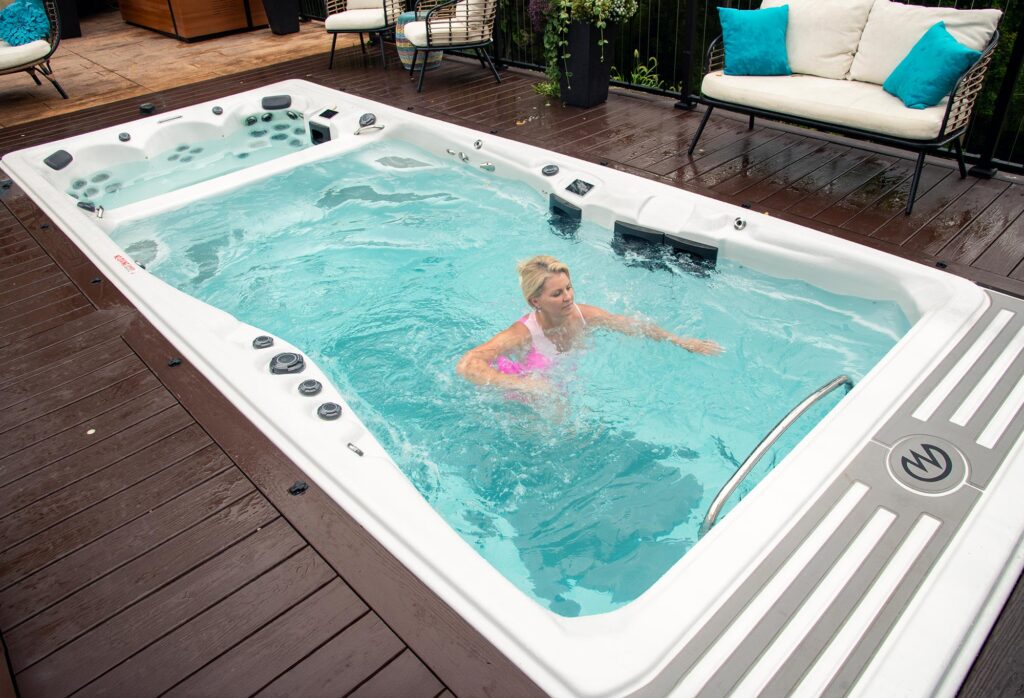
Types of exercise pools for home
There are several types of exercise pools designed for home use, and each offers different advantages depending on your available space and how you prefer to stay active.
Swim spas are a popular option because they allow you to swim continuously without requiring the length of a lap pool. Instead of relying on distance, they use an adjustable current that allows you to remain in place while controlling pace and resistance.
H2X Fitness Swim Spas are designed with an open swim area that allows room not only for swimming but also for stretching, resistance exercises, and recovery. This additional space makes it easier to vary how you use the pool from day to day, whether your focus is exercise, mobility, or relaxation.
Lap pools offer a more traditional swimming experience and are designed for repeated end-to-end laps. Because they rely on length rather than a current, they typically require more backyard space and a larger construction project.
Modular pools are another option you may encounter when researching exercise pools for home. These pools are assembled on site and may include a propulsion system or swim box that allows you to swim in place. Depending on the design, the structure of the swim system may take up space within the pool, which can reduce the amount of open area available for other types of activity.
Because many modular pools are not insulated in the same way as self-contained exercise pools, maintaining warmer water temperatures may require additional planning or equipment. Accessories such as resistance bands or tether systems are sometimes added to support different types of aquatic exercise.
Benefits of an exercise pool at home
For many homeowners, the greatest benefit of an exercise pool is the ability to stay active comfortably and consistently.
Joint stiffness, past injuries, or changes in mobility can make land-based exercise feel uncomfortable, even discouraging. Water creates a different environment — one that supports your body while still allowing you to engage muscles and build strength.
Because buoyancy reduces the effects of gravity, many people find they are able to move with greater range of motion and stability in the water. This support helps decrease impact on joints while still allowing muscles to engage, making exercise feel more comfortable than it might on land. Activities that feel challenging outside the water often become more manageable in an aquatic environment, helping support long-term consistency.
Having an exercise pool at home also removes another common obstacle: access. Instead of planning trips to a gym or local pool, activity becomes part of your daily environment. Some homeowners use their pool as part of a physical therapy routine, while others incorporate swimming or water-based exercise into their weekly fitness schedule.
H2X Fitness Swim Spas are designed with this type of flexibility in mind. The adjustable current systems allow you to modify intensity to match your fitness level and training goals. Meanwhile, built-in hydrotherapy seats with massage jets can muscle recovery.
Over time, having convenient access to water-based exercise can help support strength, stability, and overall comfort.
How much space do you need for an exercise pool?
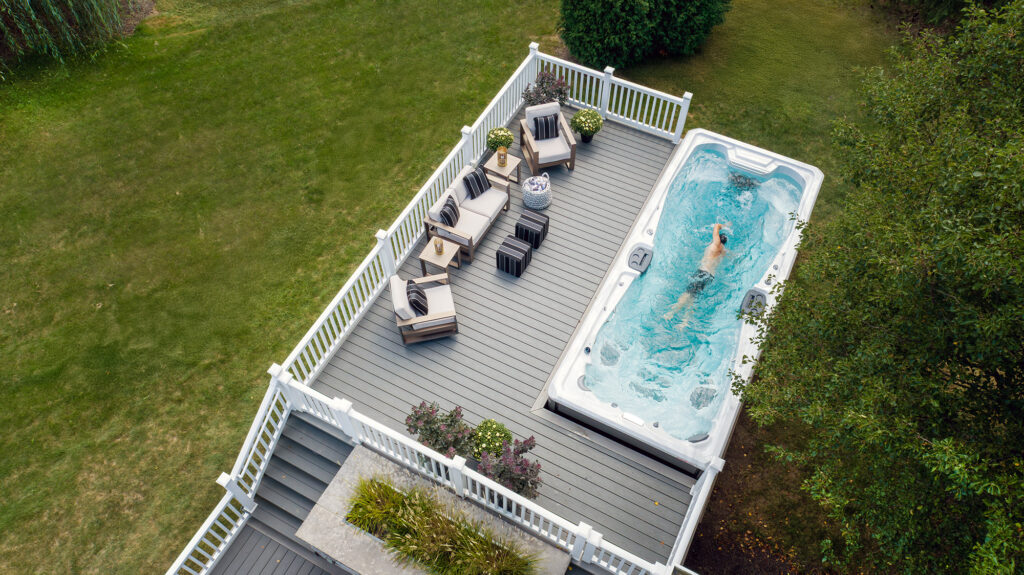
You might assume that an exercise pool requires the same amount of space as a traditional swimming pool. In many cases, the footprint can be significantly smaller.
Because exercise pools use an adjustable current for stationary swimming, they do not require the length of a lap pool. This makes them a practical option for homeowners who want the benefits of water-based fitness without committing to a large construction project.
Many exercise pools are approximately 8 feet wide and range from about 12 to more than 21 feet long, depending on the model. Smaller swim spas may be around 11 feet in length, while larger models provide additional swim space for a more open feel.
With space-conscious design and built-in functionality, H2X Fitness Swim Spas can be installed in many backyards while still providing enough swim area for a variety of water exercises. Rather than relying on length alone, the adjustable current allows you to maintain a continuous swim within a more compact footprint.
For homeowners who want a dedicated space for exercise without significantly changing their outdoor layout, the smaller footprint can be an important advantage.
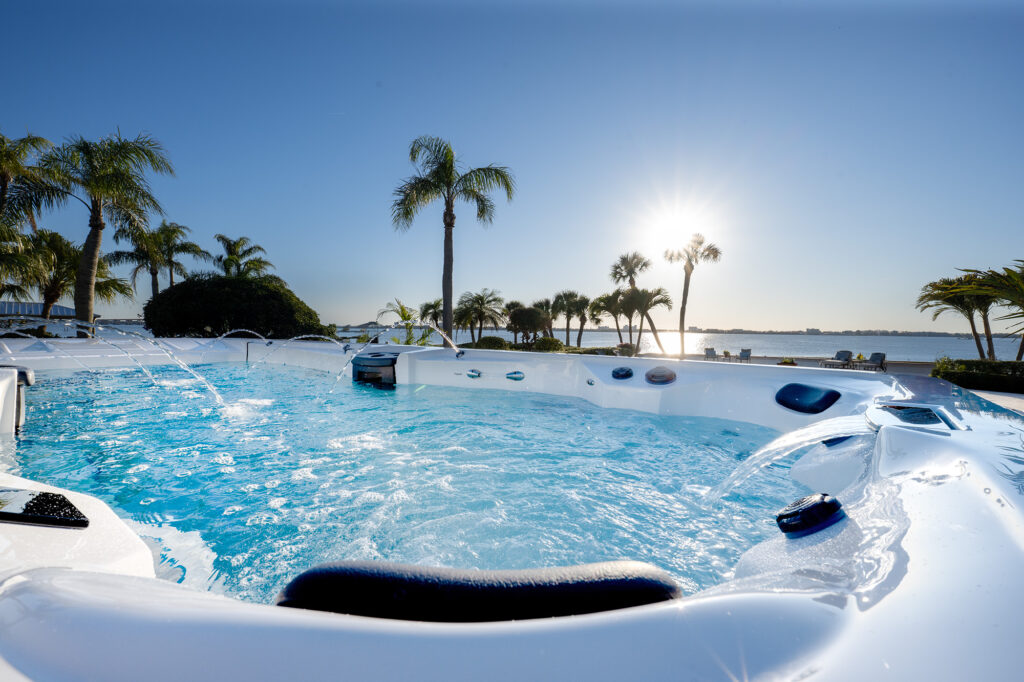
Exercise pool vs traditional pool
Both traditional pools and exercise pools provide a way to enjoy the water, but the intended experience can feel quite different.
Traditional pools are often designed around recreation and seasonal enjoyment. They can create a place for gathering with family or entertaining guests during warmer months.
An exercise pool is typically designed to support more consistent activity. Adjustable current systems allow you to swim in place, while open swim space provides room for stretching, resistance exercises, or low-impact movement. Some exercise pools include features that allow you to attach resistance bands or other aquatic fitness accessories, helping expand the variety of exercises available.
Temperature can also influence how comfortable activity feels. While some traditional pools include heaters, not all are designed to maintain consistently warm water. Exercise pools for home are often self-contained systems with built-in heating and user-friendly controls that allow you to adjust water temperature based on your preference.
Warm water can feel especially supportive if you experience joint stiffness or chronic discomfort. Many people find activity more comfortable when water temperature is maintained in a therapeutic range, often around 90 to 93 degrees.
Climate can also affect how often you use the space. In colder regions, traditional outdoor pools are typically used for only part of the year. Exercise pools designed with insulation and temperature control can often be used more consistently across seasons, helping you maintain a routine throughout the year.
What to look for in an exercise pool for home
If you are considering an exercise pool for home, the details matter — not just for performance, but for how comfortable and sustainable the experience feels over time.
Many homeowners begin their search simply wanting a way to stay active but quickly realize that small differences in design can influence how often the space becomes part of their routine.
Swim experience
A smooth, consistent swim current allows you to move at your own pace without feeling rushed or overpowered. The ability to adjust resistance allows the experience to evolve with you, whether your goal is maintaining mobility, building strength, or simply staying active regularly.
Open swim space also plays an important role. Having enough room to move freely makes it easier to vary your routine, incorporate stretching, or add low-impact strength exercises. Many homeowners find that flexibility within the same space helps support long-term consistency.
Year-round use
Consistency often makes the biggest difference in how exercise supports your health. If a pool is only comfortable to use for part of the year, it can be harder to maintain a regular routine.
Temperature control allows you to create an environment that feels supportive whenever you choose to use it. Warm water can feel especially beneficial if you experience stiffness, joint discomfort, or general muscle tightness. Being able to maintain a comfortable temperature throughout the year helps remove one more barrier to staying active.
Maintenance
Practical considerations also influence how often a space becomes part of your lifestyle. Complicated upkeep or time-consuming maintenance can make even the best intentions harder to maintain.
Self-contained systems are often designed to simplify water care and temperature management, helping reduce the amount of ongoing effort required.
H2X Fitness Swim Spas are designed to bring these elements together — swim performance, open space for activity, and temperature control — in one integrated system. The goal is not just to provide a place to exercise, but to create an environment that supports how you want to feel over time.
Is an exercise pool worth it?
Deciding whether an exercise pool is worth it often comes down to how you want to feel in the years ahead.
If your goal is primarily seasonal recreation and you have the available space, a traditional pool may meet your expectations.
If you are looking for a way to maintain mobility, build strength, and stay active in a way that feels sustainable, an exercise pool offers a practical alternative.
Many homeowners consider H2X Fitness Swim Spas because they combine the benefits of swimming, aquatic exercise, and hydrotherapy in one environment. The ability to adjust pace, resistance, and temperature allows the experience to adapt as your needs evolve.
Taking time to consider how often you want to use the space — and how you want to feel when you do — can help clarify whether an exercise pool fits your lifestyle.

Frequently asked questions
What is the best exercise pool for home use?
The best exercise pool depends on your available space, how often you plan to use it, and whether year-round access is important. Many homeowners look for options that support swimming in place while allowing for a variety of low-impact exercises.
Can you really swim in place in an exercise pool?
Yes. Many exercise pools use adjustable current systems that allow you to swim continuously without needing the length of a traditional lap pool.
Are exercise pools good for low-impact workouts?
Water supports your body weight while creating resistance, allowing exercise that helps build strength without placing excessive stress on joints. Models with a water depth of at least 48 inches can provide chest-deep immersion for many adults. At this depth, buoyancy can reduce body weight by up to 80 percent, helping reduce pressure on hips, knees, and the lower back while still allowing muscles to engage.
Are exercise pools good for arthritis or joint pain?
Many people find water-based exercise more comfortable when managing arthritis, joint stiffness, or mobility limitations. Warm water combined with buoyancy can help reduce pressure on joints while supporting gentle movement that promotes flexibility and circulation.
How much space do you need for an exercise pool at home?
Space requirements vary depending on the design, but many exercise pools are designed to fit within smaller backyard areas while still providing enough room to move comfortably.